Responsibility

We are dedicated to a comprehensive business strategy centered on ethical practices, sustainability, and an unwavering commitment to product quality. Across our supply chain, we emphasize responsible sourcing, equitable labor practices, environmental responsibility, and continuous innovation.

‍Across our supply chain, we emphasize responsible sourcing, equitable labor practices, environmental responsibility, and continuous innovation. We strive to deliver exceptional products to our customers while making a meaningful positive impact on both people and the planet.

four key pillars

Our approach to sustainability and responsible business practices is anchored by four key pillars. Life-cycle planning ensures we consider each garment’s journey from concept through end-of-life, minimizing waste and extending longevity. Environmental impact reduction drives us to continually refine our resource use and manufacturing practices. Sustainable product development propels innovation in materials and processes, ensuring quality without compromising ecological balance. Finally, our commitment to ethical supply chain and employee care guarantees fair working conditions and support for all those involved in bringing our products to life.

Ethical Supply Chain & Employee Care

"We conduct regular audits to confirm compliance with our ethical guidelines, ensuring that workers are treated fairly and work in safe conditions"

Our commitment to ethical practices begins with our supply chain, where we follow the globally recognized SMETA standard to ensure transparency, ethical labor, workplace safety, and environmental responsibility. These standards are foundational to our approach to Corporate Social Responsibility (CSR), aligning with international labor standards and the Sustainable Development Goals (SDGs).

We conduct regular audits to confirm compliance with our ethical guidelines, ensuring that workers are treated fairly and work in safe conditions. This includes providing safety equipment, adhering to occupational safety rules, and promoting fair labor practices such as reasonable working hours and fair pay. We also emphasize diversity, equity, and inclusion (DEI), creating a workplace where everyone feels valued and respected.

To maintain a transparent and responsive workplace, we have systems that allow employees to share feedback and raise concerns without fear. This open communication helps us stay true to our core values while fostering a culture of continuous improvement. Through regular training on safety, labor rights, sustainability, and DEI, we empower our employees to actively contribute to our sustainability goals.

Sustainable Product Development

"Our commitment extends to the materials we use and how we manage resources"

Quality and sustainability are at the heart of our product development strategy. Our commitment extends to the materials we use and how we manage resources. By selecting responsible materials, reducing waste, and promoting efficient resource use, we aim to minimize our environmental footprint.

We implement rigorous programs and adopt international standards like the Higg Index, OEKO-TEX®, and Zero Discharge of Hazardous Chemicals (ZDHC) to ensure our products align with customer expectations.

We partner with sustainable fiber manufacturers like Lenzing, Renewcell, Naia, and Seaqual to incorporate innovative fibers into our products. This approach aligns with our broader sustainability goals, which include lowering emissions, conserving energy, and reducing water consumption. In addition to using sustainable materials, we actively pursue zero-waste and circularity practices, collaborating with stakeholders across the supply chain to reduce waste, promote recycling, and extend the life cycle of our products.

Environmental Impact Reduction

"We reinforce our dedication to continuous improvement and collaborative efforts toward a more sustainable future"

Our sustainability strategy encompasses a broader commitment to social and
environmental impact. We actively seek partnerships with organizations and suppliers who share our values, focusing on responsible sourcing and promoting ethical practices throughout the industry.

As members of leading industry groups like Textile Exchange, Better Cotton Initiative (BCI), and Global Organic Textile Standard (GOTS), we reinforce our dedication to continuous improvement and collaborative efforts toward a more sustainable future.

We are also exploring innovative solutions to reduce waste and extend the life cycle of our products. Through recycling, repurposing, and other circular economy practices, we aim to minimize our impact on the environment.

Life-Cycle Planning

"This waste has become a significant source of environmental degradation"

The fashion industry has long been associated with significant fabric waste during production, typically caused by pattern cutting and other manufacturing inefficiencies. This waste, often discarded in landfills, has become a significant source of environmental degradation.

Additionally, the industry faces the challenge of managing the afterlife of its products, as many garments are discarded by consumers, contributing to the growing waste problem.

In response to these challenges, we have taken a substantial step towards circular fashion by building a mechanical textile recycling facility adjacent to our production sites. This move is aimed at systematically reducing fabric waste and reintroducing it into the production cycle.

Recycling process

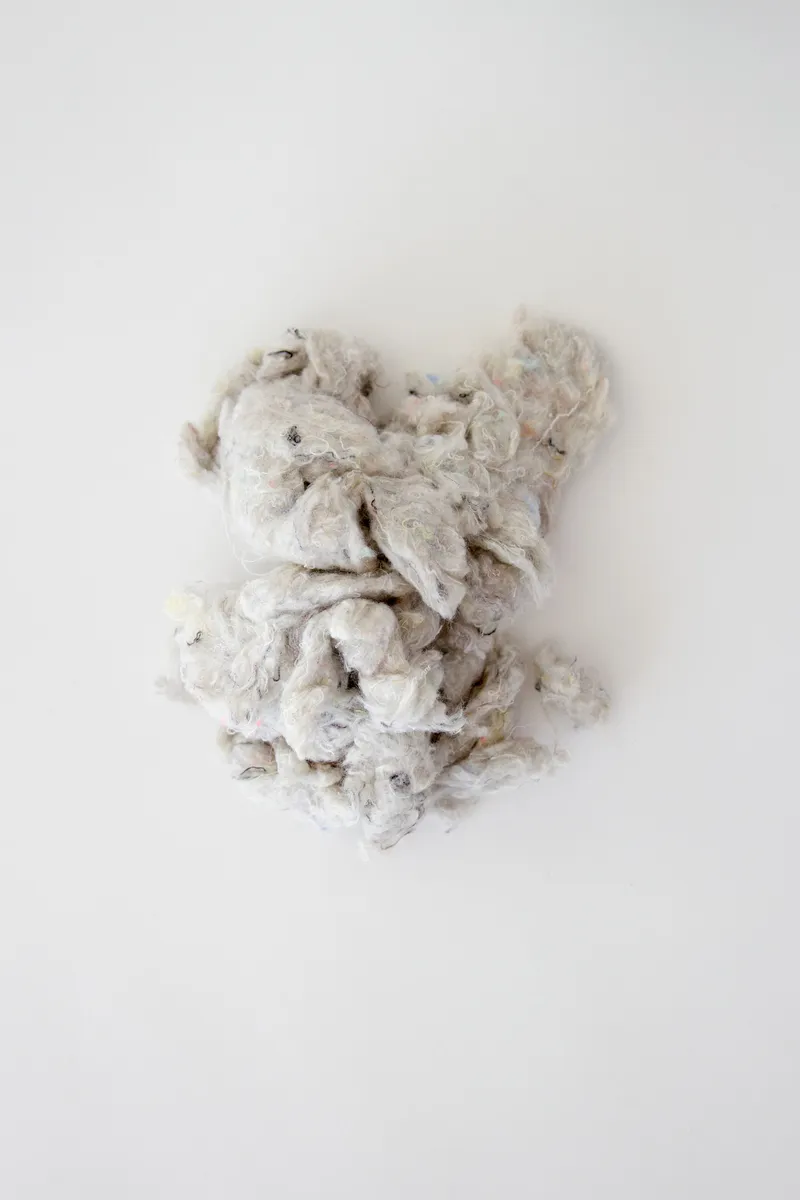
Our recycling process begins with the meticulous collection and categorization of all textile scraps and offcuts. Once sorted, these materials are processed into innovative yarn blends through a collaborative effort between our engineers and designers. This allows us to reintegrate recycled textiles into our production process, thereby contributing to the circular economy and significantly reducing our environmental footprint.

Recycling
